
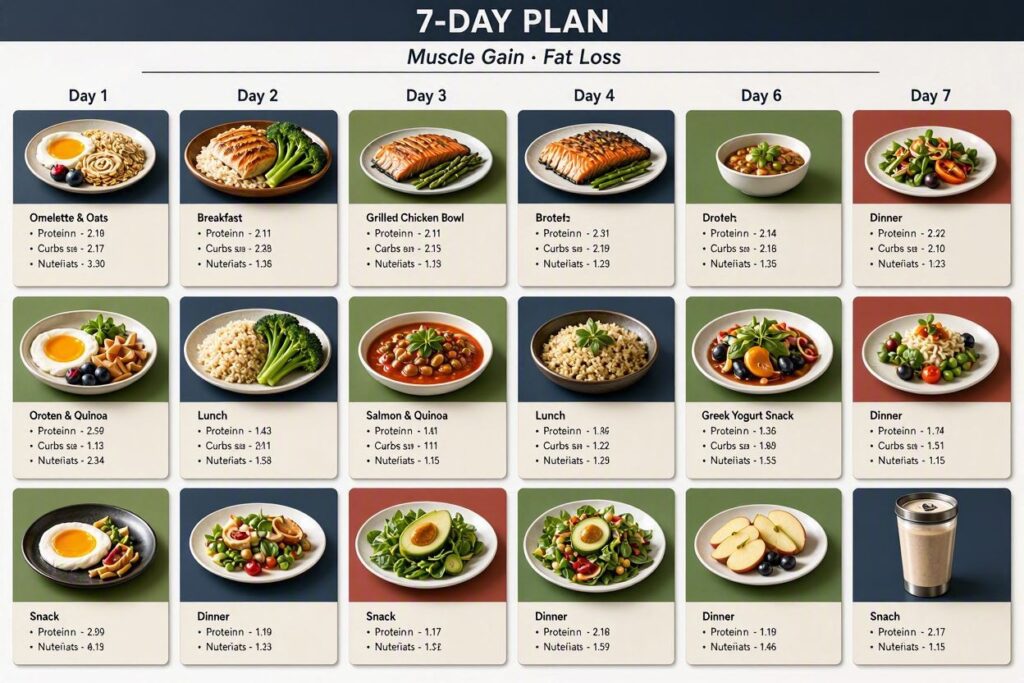
If you’ve ever felt stuck between “eat more to build muscle” and “eat less to lose fat,” you’re not alone. It sounds like a contradiction, but it isn’t. The process of building muscle while losing fat at the same time — called body recomposition — is entirely possible when your calories, protein, and training are dialed in correctly.
This isn’t about starving yourself or eating six chicken breasts a day. It’s about strategic eating: enough protein to preserve and build lean muscle, a slight calorie deficit (or maintenance intake) to encourage fat loss, and the right nutrient timing to keep your energy and performance high.
Below is a complete 7-day meal plan designed for muscle gain and fat loss, along with the science behind why it works, a grocery list, and answers to the most common questions people ask about recomposition eating.
Quick-Reference: Daily Macro Targets
| Goal | Calories | Protein | Carbs | Fats |
|---|---|---|---|---|
| Body recomposition (moderate deficit) | Maintenance minus 200–300 | 0.8–1g per lb bodyweight | 30–35% of calories | 25–30% of calories |
| Muscle gain focus (slight surplus) | Maintenance plus 100–200 | 0.8–1g per lb bodyweight | 40–45% of calories | 20–25% of calories |
These numbers are starting points, not gospel. Bodyweight, activity level, and training intensity all shift the exact math, but the underlying principle stays the same: high protein, moderate deficit or slight surplus, and consistent training.
Why This Approach Works
Protein Is Non-Negotiable
When you’re in a calorie deficit, your body will pull energy from wherever it can — including muscle tissue — unless you give it a reason not to. A high protein intake signals your body to preserve lean mass while it burns fat for fuel. Most research on body recomposition points to a range of roughly 0.7 to 1 gram of protein per pound of bodyweight for people who are strength training regularly.
A Modest Deficit Beats an Aggressive One
Cutting calories too hard is one of the fastest ways to lose muscle along with fat. A moderate deficit of 300–500 calories per day allows your body to tap into fat stores without triggering the kind of stress response that eats away at muscle tissue. Recomposition is a slower process than a straight cut, but it produces a leaner, stronger result.
Training Still Does the Heavy Lifting
No meal plan builds muscle on its own. Resistance training 3–5 times per week creates the stimulus your muscles need to grow (or at minimum, hold onto size) while you’re eating in a deficit. Think of nutrition as the fuel and recovery system, and training as the actual signal for change.
The 7-Day Meal Plan
Each day below is built around roughly 2,200–2,400 calories with 170–190 grams of protein, which fits a moderately active person around 180–200 lbs. Scale portions up or down based on your own bodyweight and activity level using the macro targets above.
Day 1
- Breakfast: 3 whole eggs + 3 egg whites scrambled, 1 cup spinach, 1 slice whole grain toast
- Snack: Greek yogurt (1 cup, plain, 2%) with 1/2 cup berries
- Lunch: 6 oz grilled chicken breast, 1 cup brown rice, roasted broccoli
- Snack: Protein shake (1 scoop whey) + 1 banana
- Dinner: 6 oz baked salmon, 1 medium sweet potato, mixed green salad with olive oil
Day 2
- Breakfast: Overnight oats (1 cup oats, 1 scoop protein powder, almond milk, cinnamon)
- Snack: Handful of almonds (about 1 oz) + apple
- Lunch: Turkey and avocado wrap on a whole wheat tortilla, side of carrot sticks
- Snack: Cottage cheese (1 cup) with pineapple chunks
- Dinner: 6 oz lean ground beef (93/7) stir-fry with mixed vegetables and 3/4 cup jasmine rice
Day 3
- Breakfast: Protein pancakes (oats, egg whites, protein powder) topped with berries
- Snack: Rice cakes with natural peanut butter
- Lunch: Tuna salad (light mayo or Greek yogurt base) over mixed greens, whole grain crackers
- Snack: Protein shake + handful of walnuts
- Dinner: 6 oz grilled shrimp, quinoa, roasted zucchini and peppers
Day 4
- Breakfast: Veggie and egg breakfast burrito (2 eggs, black beans, salsa, whole wheat tortilla)
- Snack: Greek yogurt with granola
- Lunch: 6 oz grilled chicken thigh, 1 cup roasted potatoes, side salad
- Snack: Protein bar (aim for 20g+ protein, under 10g sugar)
- Dinner: Lean turkey chili (ground turkey, kidney beans, tomatoes, peppers) over a small portion of rice
Day 5
- Breakfast: 3-egg omelet with mushrooms, onions, and low-fat cheese, side of fruit
- Snack: Cottage cheese with cucumber slices
- Lunch: Steak and vegetable bowl (6 oz sirloin, brown rice, sautéed peppers and onions)
- Snack: Protein shake + rice cake
- Dinner: Baked cod, roasted Brussels sprouts, 1 cup mashed sweet potato
Day 6
- Breakfast: Smoothie (protein powder, spinach, frozen berries, almond milk, chia seeds)
- Snack: Hard-boiled eggs (2) + orange
- Lunch: Chicken and quinoa power bowl with black beans, corn, and avocado
- Snack: Almonds and a piece of dark chocolate
- Dinner: Grilled pork tenderloin, roasted asparagus, small baked potato
Day 7
- Breakfast: Whole grain waffles with Greek yogurt and berries, drizzle of honey
- Snack: Protein shake
- Lunch: Leftover chili or a rotisserie chicken salad with mixed vegetables
- Snack: Cottage cheese with pineapple
- Dinner: Flexible/”free” meal — a balanced version of whatever you’re craving, built around a lean protein and vegetables where possible
Having one flexible meal per week isn’t a cheat — it’s a built-in tool for long-term adherence. Recomposition is a marathon, not a sprint, and a plan you can’t sustain for months won’t get you the results a plan you enjoy will.
Sample Grocery List for the Week
Proteins: eggs, egg whites, chicken breast, chicken thighs, ground turkey, ground beef (93/7), salmon, cod, shrimp, pork tenderloin, sirloin steak, Greek yogurt, cottage cheese, whey protein powder, tuna
Carbs: brown rice, jasmine rice, quinoa, oats, sweet potatoes, whole grain bread, whole wheat tortillas, rice cakes, black beans, kidney beans
Fats: avocado, olive oil, almonds, walnuts, natural peanut butter, chia seeds
Produce: spinach, broccoli, mixed greens, bell peppers, onions, mushrooms, zucchini, asparagus, Brussels sprouts, carrots, cucumbers, berries, bananas, apples, oranges, pineapple
Extras: low-fat cheese, salsa, granola, dark chocolate, protein bars, cinnamon, honey
Tips to Get the Most Out of This Plan
Prep in Batches
Cook proteins and carbs in bulk 2–3 times per week. Grilled chicken, cooked rice, and roasted vegetables all reheat well and cut your daily cooking time down to almost nothing.
Hit Your Protein First
When planning a meal, decide on the protein source first, then build carbs and vegetables around it. This keeps your protein target consistent even on busy days when the rest of the meal gets improvised.
Track for at Least 2–3 Weeks
You don’t need to weigh and log food forever, but tracking calories and protein for a few weeks gives you a real sense of portion sizes. Most people underestimate how much they’re eating until they actually measure it.
Adjust Based on the Mirror and the Scale — Not Just One or the Other
Body recomposition can mean the scale barely moves while your body changes significantly, because you’re losing fat and gaining muscle simultaneously. Progress photos, how clothes fit, and strength gains in the gym are just as important as the number on the scale.
Don’t Neglect Sleep and Recovery
Muscle is built and repaired during rest, not during the workout itself. Poor sleep also disrupts hunger hormones, making it harder to stick to a nutrition plan. Aim for 7–9 hours per night if you want your meal plan to actually pay off.
Frequently Asked Questions
Can you really build muscle and lose fat at the same time?
Yes, especially for beginners, people returning to training after time off, or those who are overweight and new to strength training. The process is slower for advanced lifters, but a well-structured plan with adequate protein and consistent training makes recomposition achievable for most people.
How much protein do I actually need?
A common and well-supported range is 0.7 to 1 gram per pound of bodyweight per day for people who are strength training. Going higher rarely hurts, but there’s a point of diminishing returns.
Should I do cardio on this plan?
Cardio isn’t required, but 2–3 sessions per week of moderate cardio can help increase your calorie deficit without cutting food further, which makes it easier to preserve muscle while losing fat.
What if I’m vegetarian or vegan?
Swap animal proteins for tofu, tempeh, seitan, legumes, edamame, and plant-based protein powders. You may need slightly larger portions to hit the same protein targets, since plant proteins are often less calorically dense per gram of protein.
How long until I see results?
Most people notice changes in how clothes fit and initial strength gains within 3–4 weeks, with more visible physical changes typically showing up around the 8–12 week mark. Recomposition is slower to show on the scale than a straight cut, so patience matters more than speed here.
Is intermittent fasting compatible with this meal plan?
Yes. The meals above can be compressed into a smaller eating window if that fits your lifestyle better — what matters most is hitting your daily calorie and protein totals, not the specific number of meals or the clock times you eat them.
Final Thoughts
Body recomposition isn’t flashy, and it doesn’t happen overnight, but it’s one of the most sustainable ways to change how your body looks and performs. This 7-day meal plan gives you a repeatable framework: high protein at every meal, a moderate calorie deficit, and enough flexibility to actually stick with it past week one.