
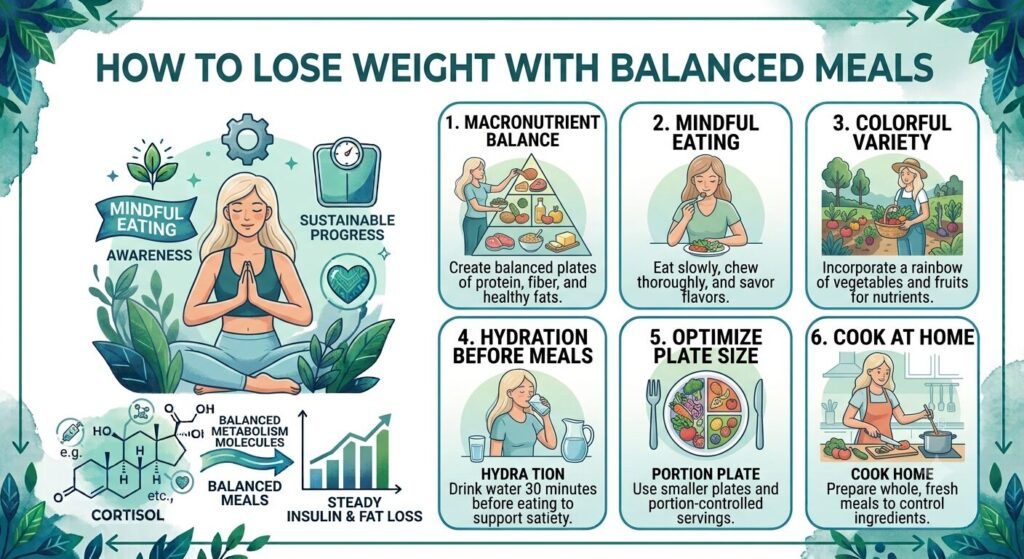
How to Lower Cortisol for Weight Loss (Simple Daily Routine That Works)
You’re eating clean. You’re hitting the gym four days a week. And yet the scale won’t budge — worse, you’re gaining fat around your midsection while everything else stays the same.
There’s a good chance stress is the missing variable in your equation, and its name is cortisol.
Cortisol doesn’t just make you feel “wired and tired.” It quietly reprograms how your body stores fat, regulates hunger, and burns energy. If you’ve ever wondered why stubborn belly fat won’t respond to diet and exercise the way it used to, high cortisol is one of the most overlooked — and most fixable — explanations.
This guide breaks down exactly what cortisol does to your body, how to recognize when it’s out of balance, and a simple daily routine you can start using today to bring it back down and support real, sustainable weight loss.
What Cortisol Does to Your Body
Cortisol is a hormone made by your adrenal glands, and it’s often called the “stress hormone” — but that’s a bit of an oversimplification. In the right amounts, cortisol is essential. It helps regulate blood sugar, manage inflammation, and give you the energy burst you need to handle a tough workout or a stressful meeting.
The problem starts when cortisol stays elevated for too long. Your body was designed to release cortisol in short bursts — a spike when you’re in danger, followed by a return to baseline once the threat passes. Modern life doesn’t work that way. Constant deadlines, poor sleep, doomscrolling, and back-to-back stress keep cortisol switched on for days, weeks, or months at a time.
The Belly Fat Link (Simple Explanation)
Here’s the short version of a fairly complex process: when cortisol stays high, your body assumes it’s under constant threat and shifts into survival mode. That means it:
- Stores more fat around your abdomen. Your midsection has a higher concentration of cortisol receptors than other areas of the body, so this is where excess fat tends to accumulate first.
- Breaks down muscle for energy. Less muscle mass means a slower metabolism, which makes it easier to gain fat and harder to lose it.
- Spikes insulin and blood sugar. Elevated cortisol pushes blood sugar up, which triggers more insulin, which in turn promotes fat storage — especially visceral fat, the deep abdominal fat that surrounds your organs.
- Increases cravings for high-calorie, high-sugar food. Your brain interprets chronic stress as a signal to seek out quick energy, which is why stress eating almost never means reaching for a salad.
Put simply: your body isn’t broken, and you’re not lacking willpower. It’s doing exactly what it evolved to do under perceived threat — it’s just that “threat” today looks like a full inbox instead of a saber-toothed tiger.
Signs Your Cortisol Is High
Cortisol imbalance rarely shows up as one obvious symptom. It’s usually a cluster of small, nagging issues that build over time. Watch for:
- Stubborn belly fat that doesn’t respond to your usual diet and exercise routine
- Intense cravings, particularly for sugar, refined carbs, and salty snacks
- Poor or interrupted sleep, including trouble falling asleep or waking up around 2–4 a.m.
- Persistent fatigue, even after a full night’s rest
- Feeling “wired but tired” — anxious or on edge, yet exhausted
- Brain fog or difficulty concentrating
- Getting sick more often, since chronically high cortisol suppresses immune function
- Irregular energy crashes, especially in the mid-afternoon
If several of these sound familiar, it’s not a coincidence — it’s your body’s way of signaling that your stress response has been switched on for far too long.
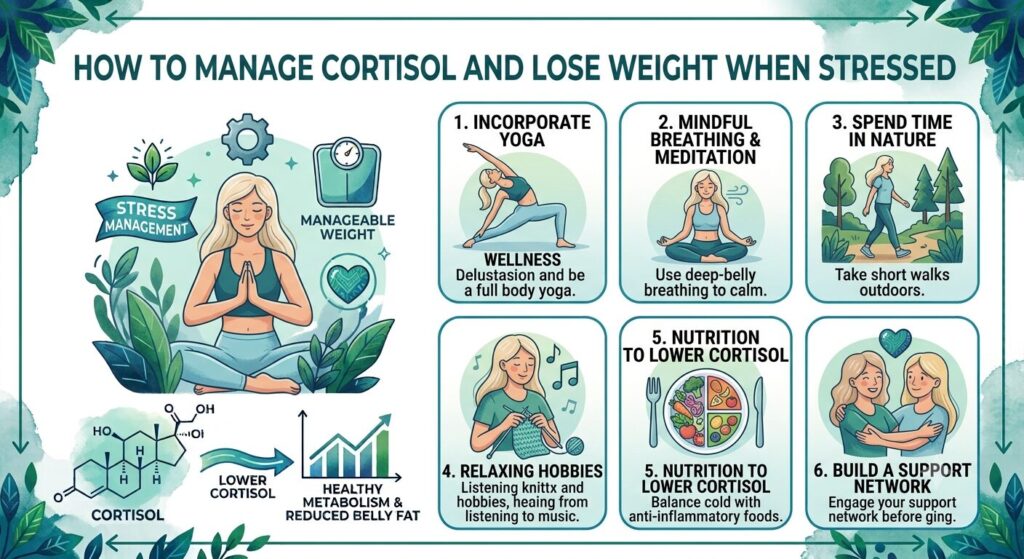
Daily Routine to Lower Cortisol
The good news is that cortisol responds fast to the right daily habits. You don’t need a complete life overhaul — you need a handful of consistent, well-timed actions repeated every day. Here’s the routine.
1. Get Morning Sunlight Within 30–60 Minutes of Waking
This is the single most underrated cortisol habit, and almost none of the mainstream health articles emphasize it. Natural light exposure early in the day helps set your circadian rhythm, which in turn regulates your natural cortisol curve — cortisol should be highest in the morning and taper off by evening.
Step outside for 10–15 minutes without sunglasses (sunscreen is fine). No sun available? Even bright daylight through an overcast sky works far better than staying indoors under artificial light.
2. Eat Balanced Meals — Don’t Skip, Don’t Restrict
Skipping meals or drastically undereating tells your body it’s under threat, which raises cortisol. Aim for balanced meals built around:
- A source of protein at every meal
- Fiber-rich vegetables or fruit
- Healthy fats (olive oil, avocado, nuts)
- Complex carbohydrates timed around activity
Eating breakfast within an hour or two of waking, rather than skipping it, helps stabilize blood sugar and prevents the cortisol spike that comes from an empty stomach colliding with morning stress hormones.
3. Limit Caffeine Timing
Coffee itself isn’t the enemy — timing is. Caffeine on an empty stomach, especially first thing in the morning when cortisol is naturally at its peak, compounds the spike rather than easing it. Two simple adjustments make a big difference:
- Wait 60–90 minutes after waking before your first cup
- Cut off caffeine by early-to-mid afternoon so it doesn’t interfere with sleep quality (poor sleep is one of the biggest cortisol triggers there is)
4. Move Daily, But Keep Intensity in Check
Low-to-moderate movement — walking, mobility work, easy cycling — actively lowers cortisol. Save the harder training sessions (lifting, HIIT) for a few days a week, and make sure they’re followed by adequate recovery. More on why below.
5. Wind Down With a Real Evening Routine
Cortisol should be at its lowest in the evening. Screens, late-night emails, and doomscrolling keep it artificially elevated. A short wind-down routine — dim lighting, no screens 30–60 minutes before bed, a few minutes of deep breathing or stretching — signals to your body that the day’s “threat” is over.
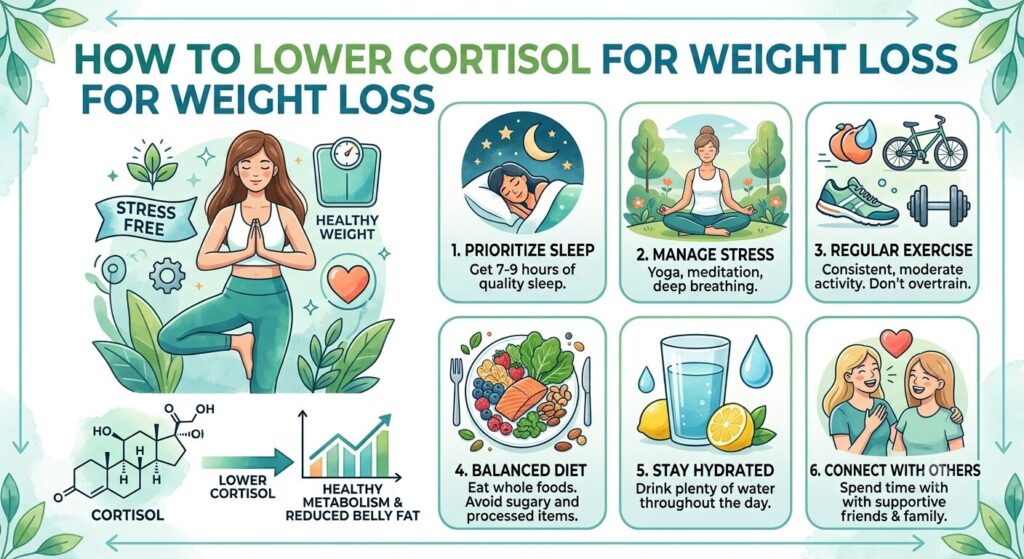
Foods That Help Balance Stress Hormones
What you eat has a direct line to your stress hormone levels. Build your plate around these whole-food staples:
- Leafy greens (spinach, kale) — rich in magnesium, a mineral shown to support healthy cortisol regulation
- Fatty fish (salmon, mackerel, sardines) — omega-3s help reduce the inflammation that keeps cortisol elevated
- Berries — high in antioxidants that combat the oxidative stress caused by chronically high cortisol
- Fermented foods (yogurt, kefir, kimchi) — support gut health, which plays a bigger role in hormone regulation than most people realize
- Complex carbs (oats, sweet potatoes, quinoa) — help stabilize blood sugar and prevent the crashes that trigger a stress response
- Nuts and seeds — a steady source of healthy fats and magnesium
- Herbal teas (chamomile, ashwagandha-based blends) — commonly used to support relaxation in the evening
The theme across all of these: whole, minimally processed foods that keep blood sugar steady. Every blood sugar crash is a small stress event for your body — and small stress events, repeated all day, add up to chronically elevated cortisol.
What to Avoid
Just as important as what you add is what you take off the table.
- Overtraining. Daily high-intensity workouts without rest days keep cortisol elevated instead of lowering it. If you’re training hard every single day and still not seeing results, less may genuinely be more.
- Extreme fasting or restrictive dieting. Prolonged fasting windows or very low-calorie diets signal scarcity to your body, which raises cortisol and can stall weight loss rather than accelerate it.
- Chronic sleep deprivation. Even one or two nights of poor sleep can measurably raise cortisol the next day.
- Excess caffeine or alcohol. Both interfere with your natural cortisol rhythm and sleep quality when overused.
- All-or-nothing thinking. Ironically, the stress of “doing everything perfectly” can itself become a cortisol trigger.
The Bottom Line
Lowering cortisol isn’t about a single supplement, a strict diet, or a punishing workout plan — it’s about a handful of small, consistent daily habits that tell your body it’s safe to stop storing fat and start releasing it. Morning sunlight, balanced meals, smarter caffeine timing, moderate movement, and real recovery aren’t flashy, but they work because they address the actual root cause instead of the symptoms.
Progress here is rarely linear, and that’s okay. Consistency over perfection will get you further than any 30-day “reset” ever will. Start with one or two changes from this routine, stack on more as they become habits, and give your body the time it needs to recalibrate.
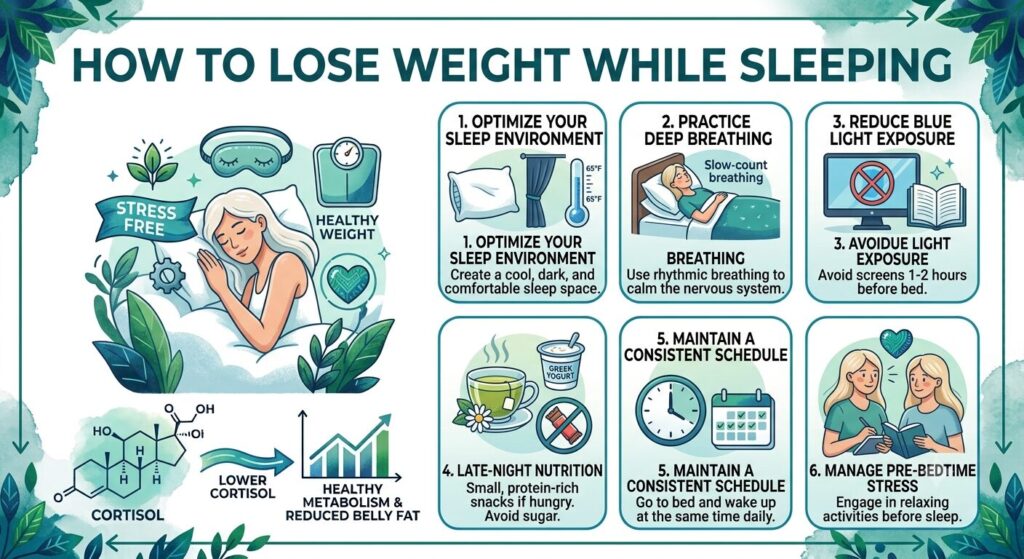
FAQs
Can high cortisol really cause weight gain even if I’m eating well? Yes. Chronically elevated cortisol promotes fat storage — particularly visceral fat around the abdomen — increases cravings, and can slow metabolism by breaking down muscle tissue, regardless of how clean your diet is.
How long does it take to lower cortisol naturally? Some habits, like morning sunlight and better caffeine timing, can improve your energy and cravings within days. Meaningful changes in stubborn fat storage typically take several weeks to a few months of consistent habits.
Is intermittent fasting good or bad for cortisol? It depends on the person and the approach. Moderate fasting windows can be fine for some people, but extreme or prolonged fasting — especially combined with high stress or intense training — can raise cortisol and backfire.
What’s the fastest way to lower cortisol in the morning? Get outside for natural light shortly after waking, delay caffeine by 60–90 minutes, and eat a balanced breakfast with protein rather than skipping the meal or grabbing something sugary.
Do cortisol supplements actually work? Some ingredients, like ashwagandha and magnesium, have research supporting a modest effect on stress and cortisol levels. However, supplements work best as a complement to — not a replacement for — sleep, nutrition, and stress management habits.
Can stress alone cause belly fat without overeating? Yes. Cortisol influences where fat is stored, not just how much you eat. Chronic stress can lead to increased abdominal fat storage even when calorie intake hasn’t changed significantly.