If you’ve been searching for a way to lose weight without punishing workouts or complicated meal plans, walking 10,000 steps a day for weight loss might be the simplest, most sustainable answer you haven’t tried yet. I’ve coached clients for over 20 years — runners, powerlifters, busy parents who hate gyms — and walking is the one habit almost everyone can stick with long enough to see real results.
In this article, I’ll walk you (pun intended) through exactly what happens to your body over 30 days of hitting 10,000 steps daily, including calorie burn by body weight, a realistic transformation timeline, and the honest ups and downs nobody puts in the Instagram captions.
Why Walking 10,000 Steps a Day for Weight Loss Actually Works
The 10,000-step number didn’t come from a sports scientist — it started as a marketing slogan for a Japanese pedometer in the 1960s. But decades later, research on daily step counts backs it up as a genuinely useful target. Walking that much typically adds up to 45-90 minutes of extra movement spread across your day, which creates a calorie deficit without the joint stress, recovery time, or intimidation factor of high-intensity training.
The magic isn’t really about hitting exactly 10,000. It’s about consistency. Your body responds to the accumulation of daily movement — better insulin sensitivity, improved circulation, lower resting heart rate, and yes, a steady calorie burn that adds up over weeks. That’s why walking 10,000 steps a day for weight loss keeps showing up as one of the most recommended, most repeatable strategies I give clients who’ve burned out on everything else.
Calorie Burn Estimates by Body Weight
Calorie burn from walking depends heavily on your weight, pace, and terrain, but here are realistic estimates for 10,000 steps (roughly 4.5-5 miles) at a moderate pace:
- 130 lbs (59 kg): ~300-350 calories
- 150 lbs (68 kg): ~350-400 calories
- 175 lbs (79 kg): ~400-450 calories
- 200 lbs (91 kg): ~450-500 calories
- 225+ lbs (102+ kg): ~500-600 calories
Add hills, a weighted vest, or a brisker pace and you can push these numbers up by 15-20%. Over 30 days, even the conservative end of this range (300 calories/day) adds up to roughly 9,000 calories burned — the equivalent of over 2.5 pounds of fat, before you even adjust your diet

.
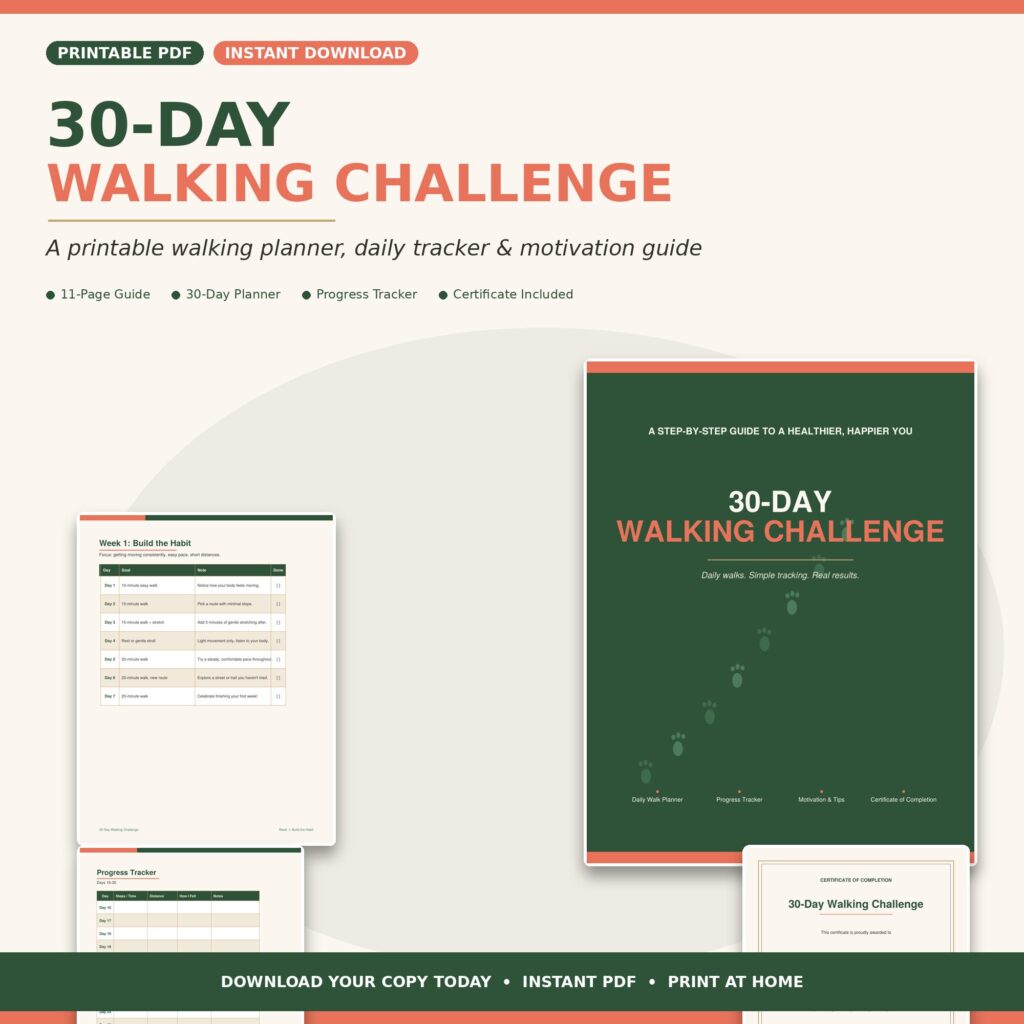
Your 30-Day Walking Plan: Day-by-Day Breakdown
I always tell clients: don’t jump straight to 10,000 steps on day one if you’re currently sedentary. You’ll burn out or get shin splints. Here’s the ramp-up I use with real clients.
Days 1-5: Building the Base (5,000-6,500 steps) Start where you are. If you’re averaging 3,000 steps a day, jumping to 10,000 overnight is a recipe for quitting by Thursday. Add a 15-20 minute walk after breakfast and another after dinner. Track your baseline honestly.
Days 6-10: Momentum Phase (6,500-7,500 steps) This is where most people start noticing small wins — better sleep, less afternoon energy crash. Start parking farther from entrances and taking phone calls while walking instead of sitting.
Days 11-15: The Push to 10K (7,500-9,000 steps) Add a dedicated 30-minute walk, ideally in the morning to set your metabolism up for the day. Some soreness in your calves and feet is normal here — that’s your body adapting, not a warning sign.
Days 16-20: Hitting the Target (9,000-10,000 steps) By now you should be consistently near or at 10,000. This is also when the scale often stalls temporarily as your body retains a little water from the new activity. Don’t panic — this is textbook and temporary.
Days 21-25: Consistency Phase (10,000+ steps) You’re in the habit now. Focus on pace — a brisker walk (3.5-4 mph) burns noticeably more than a stroll. Try adding one or two hillier routes this week.
Days 26-30: Locking It In (10,000-12,000 steps) Many clients naturally push past 10,000 by this point because walking has become enjoyable rather than a chore. This is where visible changes — looser waistbands, more defined calves — really start showing up in the mirror.
A Realistic Transformation Timeline
Here’s the honest version, not the highlight reel:
- Week 1: No visible change. You’ll likely feel more energetic and sleep slightly better. Weight may not move much, or may even tick up slightly due to water retention from new muscle activity.
- Week 2: The scale usually starts trending down — typically 1-2 lbs of genuine loss becomes visible once initial water fluctuation settles. Clothes may feel marginally looser around the waist.
- Week 3: This is usually the most encouraging week. Cumulative deficit shows clearly — most clients see 2-4 lbs total loss by this point, along with noticeably less bloating and better digestion.
- Week 4: Total realistic loss over 30 days for most people combining steps with modest diet awareness: 4-8 pounds, plus visible improvements in posture, calf/leg tone, and energy levels. If diet hasn’t changed at all, expect the lower end (2-4 lbs) — walking alone without any nutrition awareness has a ceiling.
The people who get the best 30-day results pair their steps with one simple dietary change — cutting liquid calories, adding protein at breakfast, or trimming portion sizes slightly. Walking creates the deficit; a small nutrition tweak protects it.
Practical Tips I Give Every Client
- Track steps honestly. Phone in your pocket or a cheap wearable — accuracy matters less than consistency of tracking.
- Split it up. Three 15-20 minute walks beat one dreaded hour-long slog for adherence.
- Walk after meals when possible. A 10-15 minute walk after lunch and dinner noticeably blunts blood sugar spikes and helps digestion.
- Don’t ignore your shoes. Worn-out sneakers are the #1 cause of new walkers developing knee or foot pain in week two.
- Weather-proof your routine. Have a mall-walking or treadmill backup plan for bad weather days — missing one day rarely derails progress, but missing a week does.
FAQs About Walking 10,000 Steps a Day for Weight Loss
How many pounds can I lose walking 10,000 steps a day for 30 days? Most people see 4-8 pounds in 30 days when combining consistent walking with modest dietary awareness. Walking alone, without any diet changes, typically produces 2-4 pounds.
Do I need to walk all 10,000 steps at once? No. Splitting steps into 3-4 shorter walks throughout the day is just as effective for calorie burn and often easier to stick with long-term.
Is walking 10,000 steps a day enough exercise, or do I need to add strength training? Walking is excellent for calorie burn and cardiovascular health, but pairing it with 2-3 short strength sessions a week will improve muscle tone and metabolism further, especially after the first 30 days.
What if I can’t hit 10,000 steps because of my schedule? Even 7,000-8,000 steps a day produces meaningful results. The goal is consistent progress, not a rigid number — any increase from your current baseline helps.
Will walking 10,000 steps a day tone my legs? Yes, especially with varied terrain like hills or inclines. Flat, flat walking mostly burns calories; adding elevation builds visible calf and glute tone over several weeks.
How long before I see visible results? Most people notice energy and sleep improvements within the first week, but visible physical changes (loosening clothes, leaner appearance) typically take 2-3 weeks of consistency.
Final Thoughts
Walking 10,000 steps a day for weight loss isn’t flashy, and it won’t get you a six-pack in a month. But after 20 years of watching clients try everything from crash diets to boot camps, walking remains one of the few habits that actually sticks — because it fits into real life instead of demanding you rearrange it.
Start where you are, follow the ramp-up, track your steps honestly, and give it the full 30 days. The results are real, they’re sustainable, and they’re the kind you can keep building on long after day 30.
Get the latest articles HERE.