
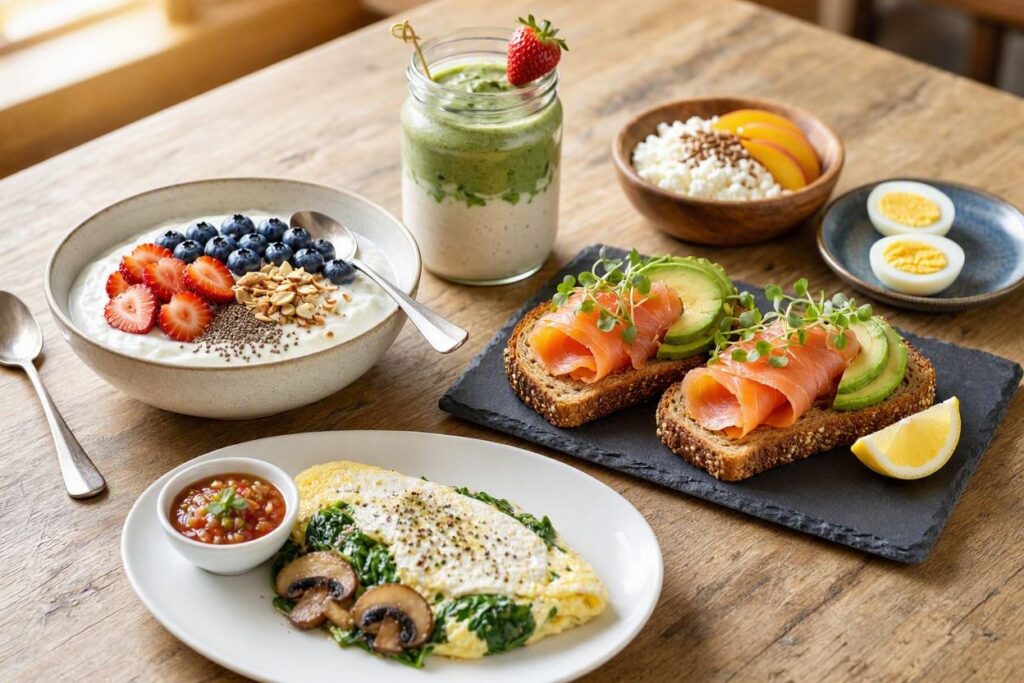
After 20+ years of coaching clients through fat loss, muscle gain, and everything in between, I can tell you the single most common mistake people make at breakfast is this: they eat something that “feels” light — a bowl of cereal, a piece of toast, a granola bar — and then wonder why they’re raiding the office snack drawer by 10 a.m.
Here’s the deal. Protein is the most satiating macronutrient we have. It blunts ghrelin (your hunger hormone), keeps blood sugar stable, and — this is the part most people miss — it costs your body more energy to digest than carbs or fat. That’s not a gimmick, that’s basic thermic effect of food. If weight loss is the goal, your breakfast needs to be doing more than just “not being terrible.” It needs to be pulling weight.
Below are 21 high-protein breakfasts I’ve actually used with clients, ranging from 5-minute grab-and-go options to slower weekend builds. All come in around 25-40+ grams of protein and stay reasonable on calories. I’ve grouped them by how much time and effort they take, so you can find something that fits your actual morning — not just your Pinterest board.
Southwest Airlines Rapid Rewards
Quick Comparison Table
| Breakfast | Protein | Calories (approx) | Prep Time | Best For |
|---|---|---|---|---|
| Greek Yogurt Protein Bowl | 30g | 320 | 5 min | Grab-and-go |
| Egg White Veggie Scramble | 28g | 280 | 10 min | Low-calorie dieters |
| Cottage Cheese & Berries | 25g | 260 | 3 min | No-cook mornings |
| Protein Overnight Oats | 32g | 400 | 5 min (night before) | Meal preppers |
| Turkey Bacon & Egg Muffins | 24g | 220 (2 muffins) | Batch prep | On-the-go weeks |
| Tofu Scramble | 26g | 290 | 12 min | Plant-based |
| Protein Smoothie Bowl | 35g | 380 | 8 min | Post-workout |
| Smoked Salmon Toast | 27g | 340 | 7 min | Weekend treat |
| Chia Protein Pudding | 24g | 310 | 5 min (night before) | No-cook, high fiber |
| Breakfast Burrito Wrap | 33g | 420 | 10 min | Bigger appetites |
| Protein Pancakes | 30g | 360 | 15 min | Weekend cooking |
| Peanut Butter Protein Toast | 22g | 300 | 5 min | Simple & cheap |
| Egg Muffin Cups (classic) | 26g | 210 (2 muffins) | Batch prep | Meal preppers |
| Cottage Cheese Toast | 23g | 280 | 5 min | Savory lovers |
| Protein Chia Overnight Parfait | 28g | 330 | 5 min (night before) | No-cook variety |
| Steak & Eggs | 40g | 450 | 12 min | High-appetite / lifters |
| Protein French Toast | 29g | 380 | 15 min | Weekend indulgence |
| Shakshuka (protein-boosted) | 27g | 340 | 20 min | Slow weekend mornings |
| Bagel Thin with Lox & Cream Cheese | 26g | 350 | 5 min | Busy weekday |
| Breakfast Quesadilla | 31g | 400 | 10 min | Family-friendly |
| Protein Coffee (“Proffee”) + Snack | 25g | 250 | 3 min | Ultra-busy mornings |
In-Depth Breakdown
1. Greek Yogurt Protein Bowl
Plain Greek yogurt is one of the best breakfast bases going, because most of its calories come from protein rather than sugar — unlike flavored versions loaded with added sweeteners. Top it with berries, a spoon of nut butter, and a sprinkle of granola for crunch. Pros: Zero cooking, cheap, endless topping variety. Cons: Flavored yogurts can sneak in a lot of added sugar — read labels. Cost: ~$1.50/serving. Best for: Anyone who wants a five-minute breakfast with almost no cleanup.
2. Egg White Veggie Scramble
Whole eggs are great, but if you’re specifically trying to maximize protein per calorie, a mix of 2 whole eggs plus a cup of egg whites gets you there while keeping calories low. Load it with spinach, peppers, and onions for volume and micronutrients. Pros: Very low calorie for the protein you get; huge portion size. Cons: Some people find egg whites alone bland or rubbery without the yolks. Cost: ~$2/serving. Best for: People counting calories closely who still want a big plate.
3. Cottage Cheese & Berries
Cottage cheese has quietly become the darling of the fitness world for good reason — it’s mostly casein protein, which digests slowly and keeps you full for hours. Pair with fresh or frozen berries and a drizzle of honey. Pros: No prep, slow-digesting protein, cheap. Cons: Texture is polarizing — some people just don’t like it. Cost: ~$1.75/serving. Best for: Anyone who wants the longest possible stretch between breakfast and lunch cravings.
4. Protein Overnight Oats
Mix oats, a scoop of protein powder, milk of choice, and chia seeds the night before. By morning you’ve got a thick, pudding-like breakfast that requires zero morning effort. Pros: Made ahead, portable, customizable flavors. Cons: Protein powder quality varies — cheap ones can taste chalky. Cost: ~$2.25/serving. Best for: People who are not morning people.
5. Turkey Bacon & Egg Muffins
Whisk eggs with diced turkey bacon, spinach, and a little cheese, then bake in a muffin tin. Make a dozen on Sunday and you’ve got grab-and-go breakfasts through Thursday. Pros: Batch-prep once, portion-controlled, freezer-friendly. Cons: Requires a prep session — not spontaneous. Cost: ~$0.90/muffin. Best for: Anyone meal-prepping for a busy work week.
6. Tofu Scramble
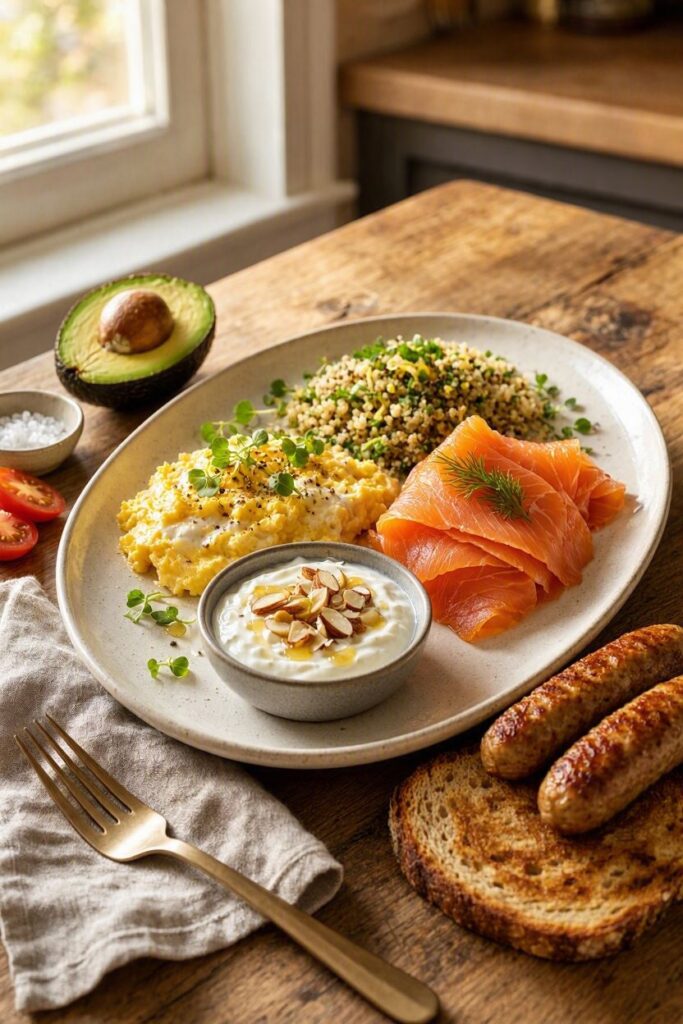
Crumbled firm tofu sautéed with turmeric (for color), nutritional yeast, and veggies mimics a classic scramble and delivers a solid plant-based protein hit. Pros: Fully plant-based, cholesterol-free, high in iron. Cons: Needs seasoning to avoid tasting flat — don’t skip the spices. Cost: ~$2/serving. Best for: Vegans and vegetarians who miss scrambled eggs.
7. Protein Smoothie Bowl
Blend protein powder, frozen banana, spinach, and Greek yogurt into a thick base, then top with granola, seeds, and fruit for a breakfast that eats like dessert. Pros: Great post-workout option, feels indulgent. Cons: Easy to oversize toppings and blow past your calorie target. Cost: ~$3/serving. Best for: Post-workout mornings when you want something cold and refreshing.
8. Smoked Salmon Toast
Whole grain toast topped with cottage cheese or light cream cheese, smoked salmon, capers, and red onion. This one punches well above its weight in omega-3s too. Pros: Feels like a treat, great fats for heart health. Cons: Pricier than most on this list. Cost: ~$4/serving. Best for: Weekend mornings when you want something that feels special.
9. Chia Protein Pudding
Chia seeds soaked overnight in protein-spiked milk swell into a pudding-like texture. Add cocoa powder or vanilla and top with fruit. Pros: High fiber on top of high protein — great for fullness. Cons: Texture (gel-like, seedy) isn’t for everyone. Cost: ~$2/serving. Best for: People who want more fiber alongside their protein.
10. Breakfast Burrito Wrap
Scrambled eggs, black beans, a little cheese, and salsa rolled into a whole wheat tortilla. Wrap in foil the night before for an easy grab on the way out. Pros: Very portable, filling, freezer-friendly in batches. Cons: Easy to oversize the tortilla and add too many calories. Cost: ~$2.50/serving. Best for: Bigger appetites who need real volume in the morning.
11. Protein Pancakes
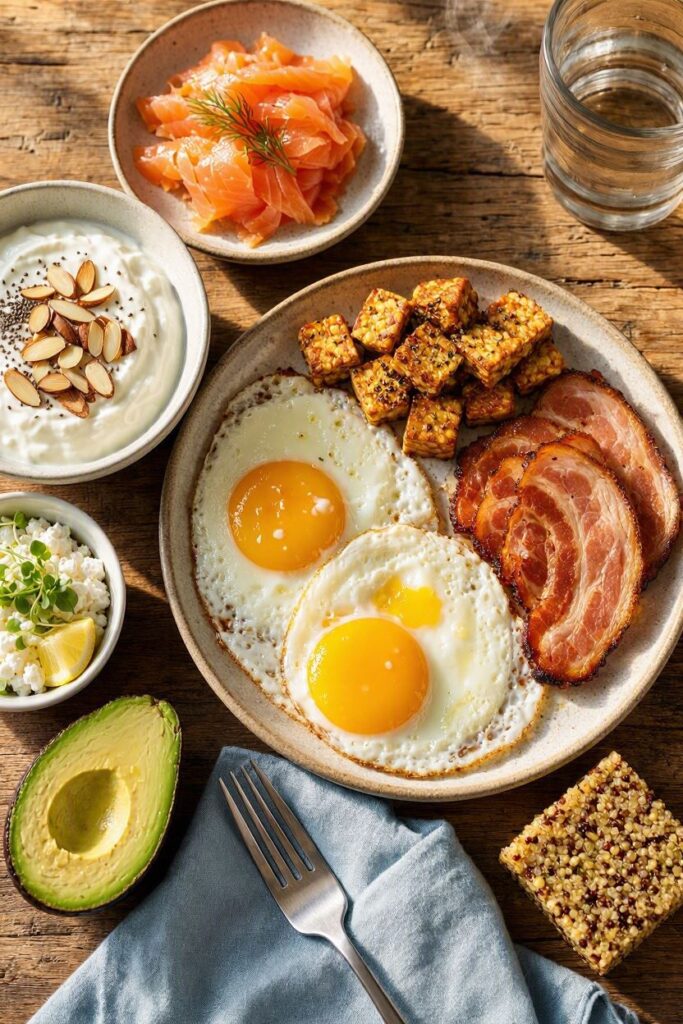
Blend cottage cheese, eggs, oats, and a banana for a pancake batter that’s naturally high in protein without needing a specialty mix. Pros: Kid-friendly, satisfies a “treat breakfast” craving without derailing goals. Cons: Takes more active cooking time than most on this list. Cost: ~$1.50/serving. Best for: Weekend mornings when you have time to cook.
12. Peanut Butter Protein Toast
Whole grain toast with a tablespoon of natural peanut butter and a scoop of protein powder mixed in, topped with banana slices. Pros: Dead simple, cheap, kid-approved. Cons: Calorie-dense — easy to eat more peanut butter than intended. Cost: ~$1/serving. Best for: Anyone who wants a breakfast with almost zero decision fatigue.
13. Classic Egg Muffin Cups
Same idea as the turkey bacon version, simplified: eggs, spinach, cheese, baked in a muffin tin. The blank-canvas version you can customize endlessly. Pros: Cheapest batch-prep option on this list. Cons: Can dry out if overbaked — watch your oven time. Cost: ~$0.60/muffin. Best for: Budget-conscious meal preppers.
14. Cottage Cheese Toast
An underrated combo: whipped cottage cheese spread on toast, topped with everything bagel seasoning, sliced tomato, or fruit and honey depending on your mood. Pros: Fast, versatile between sweet and savory. Cons: Whipping it smooth takes an extra step (blender or fork mashing). Cost: ~$1.75/serving. Best for: People who want a savory option without cooking eggs.
15. Protein Chia Overnight Parfait
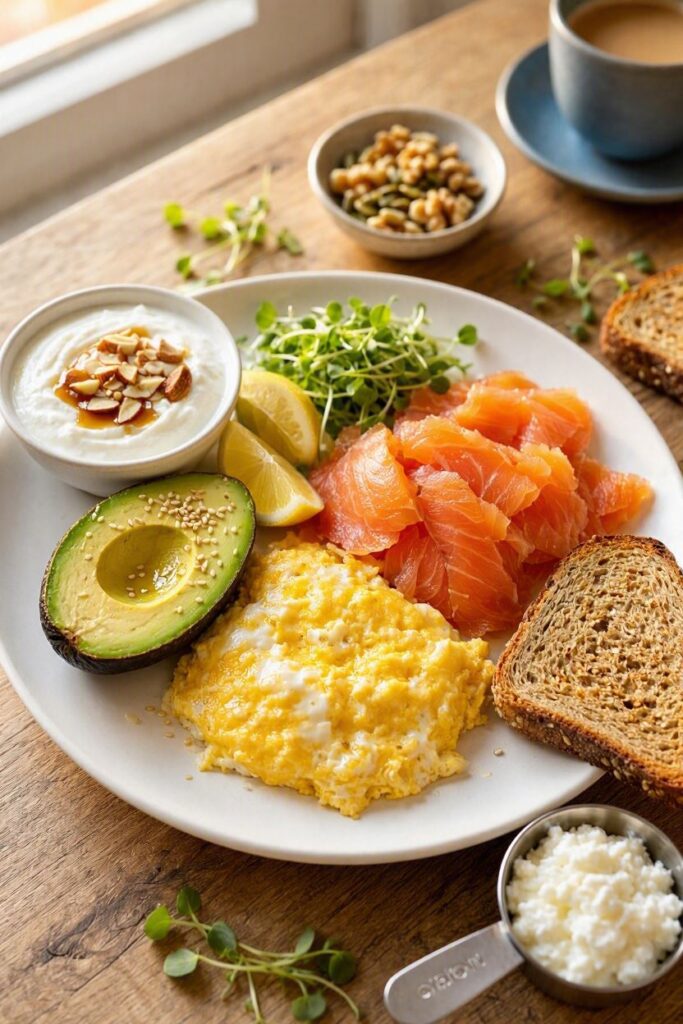
Layer chia pudding, Greek yogurt, and berries in a jar the night before for a parfait that looks (and tastes) more indulgent than it is. Pros: Great texture variety, looks great for meal-prep photos if that motivates you. Cons: Needs a jar or container — slightly more dishes. Cost: ~$2.50/serving. Best for: Anyone who wants variety across their week of overnight breakfasts.
16. Steak & Eggs
Leftover steak (or a quick-seared sirloin) with two eggs. This is the highest-protein option on the list and a favorite among lifters and anyone with a bigger calorie budget. Pros: Extremely satiating, great for muscle retention during a cut. Cons: Highest cost and calorie count on this list. Cost: ~$5/serving. Best for: People who train hard and need more fuel, not just less food.
17. Protein French Toast
Dip whole grain bread in a mix of eggs, a scoop of protein powder, cinnamon, and milk, then pan-fry. Tastes like a cheat meal, isn’t one. Pros: Satisfies a sweet craving without derailing the week. Cons: Needs active stovetop time. Cost: ~$1.75/serving. Best for: Weekend “treat” mornings.
18. Protein-Boosted Shakshuka
The classic North African dish of eggs poached in spiced tomato sauce, with a can of white beans stirred in for extra protein and fiber. Pros: Big flavor, great for slow weekend mornings, very filling. Cons: Longest cook time on this list (~20 minutes). Cost: ~$2.25/serving. Best for: Leisurely mornings when you actually want to cook.
19. Bagel Thin with Lox & Cream Cheese
A lighter spin on a bagel-shop classic — a thin bagel instead of a full-size one keeps the carbs in check while the smoked salmon and cream cheese bring the protein and flavor. Pros: Feels like a treat, minimal prep. Cons: Sodium can run high — watch it if you’re sensitive. Cost: ~$3.50/serving. Best for: Busy weekdays when you still want something that feels good.
20. Breakfast Quesadilla
Scrambled eggs, black beans, and cheese folded into a whole wheat tortilla and crisped in a pan. A hit with kids and adults alike. Pros: Family-friendly, easy to make in bulk for the whole household. Cons: Cheese and tortilla can add up calorie-wise if you’re not measuring. Cost: ~$2/serving. Best for: Feeding a family without making five different breakfasts.
21. Protein Coffee (“Proffee”) + Protein Snack
For the mornings when breakfast just isn’t happening: blend cold brew with a scoop of protein powder and a splash of milk, and pair it with a hard-boiled egg or protein bar on your way out the door. Pros: Fastest option on this list by far. Cons: Not as satiating as a full meal — best as a stopgap, not a daily habit. Cost: ~$2/serving. Best for: The mornings where “something is better than nothing.”
Frequently Asked Questions
How much protein should I actually eat at breakfast for weight loss? Most research on satiety and muscle preservation points to somewhere in the 25-40 gram range per meal. Below that, you’re not getting much of a fullness benefit; above that, you hit diminishing returns unless you’re a larger or more active person.
Can I lose weight without eating a high-protein breakfast? Yes — total daily calories and overall protein intake matter more than any single meal. But in my experience coaching clients, a high-protein breakfast makes it dramatically easier to stay on track for the rest of the day, simply because you’re not white-knuckling hunger by 10 a.m.
Is it bad to skip breakfast entirely (intermittent fasting)? Not inherently. If you do well with intermittent fasting, that’s a legitimate strategy. The key is what happens at your first meal — if it’s still low in protein, you’ll likely struggle with fullness later regardless of when you eat.
What’s the cheapest way to hit these protein numbers? Eggs, cottage cheese, and plain Greek yogurt are your best cost-per-gram-of-protein options. Batch-prepped egg muffins are typically the cheapest option on this entire list.
Do I need protein powder to hit these targets? No, but it makes it easier, especially for smoothies, oats, and pancakes. Whole-food sources like eggs, dairy, and lean meats can absolutely get you there without it.
Can these breakfasts work for vegetarians or vegans? Yes. The tofu scramble is fully vegan, and yogurt, cottage cheese, and egg-based options cover vegetarians. Swapping dairy protein powder for a pea or soy-based one adapts most of the smoothie and oats recipes for a vegan diet too.